A Lot of Headaches Have More to Do With the Neck Than People Realize
Not all headaches come from the neck. But neck-related headaches are something we see regularly, and the clues are often hiding in what happens at the same time as the headache.
Does your neck get stiff when the headache comes on? Is one side noticeably tighter? Do you lose neck motion when the headache is worse? Does turning, sitting, working at a computer, or holding your head in certain positions change what you feel?
None of those things proves your headache is coming from your neck. But when the headache and the neck consistently change together, the neck deserves a closer look.
A cervicogenic headache is a headache related to a problem in the cervical spine and surrounding structures. Figuring out whether that’s actually what you’re dealing with takes more than asking where your head hurts.
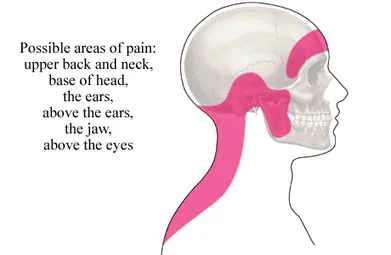
That can look like:
- Jaw pain/tooth pain
- Occipital headache or pain at the base/back of the head
- Frontal headaches (area above the eyebrow)
- Temporal pain or pain near the temples
- Eye pain
- Pain that wraps around the head
- Sinus pain
- Pain associated with the head/neck/upper back
Try This Yourself
Here are two simple positions you can try.
First, sit up tall and pull your chin straight back toward your throat. Keep your head level rather than nodding down. Hold that position for ten or twenty seconds.
For the second, lie on your stomach, prop yourself onto your elbows, and rest your chin on your fists.
It’s basically an awkward senior photo.
Again, give it a little time.
Then pay attention to what happens. Did your familiar headache get better, worse, move, or stay exactly the same? Did your neck motion change afterward?
You’re not trying to diagnose yourself here.
We’re looking for a clue. If it changes, it means it’s changeable — and that’s useful information, and something we’d want to investigate during an exam.
The same idea applies to the rest of your day. If certain movements, positions, or long stretches of sitting reliably affect the headache, tell us. Patterns like that can help us decide what deserves to be tested.
Something to Try in the Meantime
Here’s a self-release drill that can take the edge off while you work out what’s actually driving it.
Lie on your back with a lacrosse ball tucked under the base of your skull, into the suboccipital muscles at the top of your neck. Find the spot that feels tight — or the one that recreates your familiar headache, which is the one you want. Let your weight rest into it and hold for about ninety seconds, until you feel something change.
A tennis ball works too and gives less pressure, which is the better place to start if you’re sensitive.
Be clear about what this is, though. It’s relief, not a fix. It isn’t identifying anything and it isn’t addressing whatever is producing the headache in the first place. But it can help, and it’s worth having in your pocket while you sort out the bigger question.
What About Migraines?
Migraine is a neurological condition, and REACH doesn’t position chiropractic or rehab as a treatment for migraine itself.
That’s worth saying because people often use “migraine” to describe any headache that’s bad enough to ruin the day.
There’s also some overlap. People with migraine can have neck pain and stiffness, and having migraine doesn’t mean you can’t also have a musculoskeletal neck problem.
Our job is to figure out whether there’s a neck component we can actually influence.
If your presentation sounds more like a primary headache disorder or something outside our lane, we’ll tell you and help point you toward the appropriate medical care.
When to Get Checked Out First
Most recurring headaches aren’t emergencies, but some headaches should be medically evaluated before anyone starts talking about posture, tight muscles, or neck mechanics.
A sudden, extremely severe headache that’s different from anything you’ve experienced before deserves urgent attention. So do headaches accompanied by new weakness, numbness, difficulty speaking, confusion, fainting, significant vision changes, fever or serious illness, or a headache that begins after significant head or neck trauma.
A major unexplained change in your normal headache pattern is another reason to get checked.
And from our end, if your history or exam doesn’t behave like the kind of problem we treat, we don’t force it into the rehab + chiropractic box.
We help you figure out where you should go next.
If You've Already Been Everywhere
Some people come to us before they’ve had a neurological workup. Others come after.
The second group can be interesting because sometimes the dangerous or neurological causes have been investigated, but the headache is still there.
If your familiar headache also changes predictably with neck movement, position, or loading, that makes us interested in whether the neck has been thoroughly assessed from a mechanical standpoint.
Not because somebody necessarily missed something.
They may simply have been answering a different question.
“Is there something medically wrong?” and “Is there something mechanical we can change?” aren’t the same question.
And It Isn't Always the Upper Neck
When someone has a headache and neck pain, it’s easy to focus entirely on the very top of the neck.
And yes, that area matters.
But we don’t stop there.
The lower neck and upper back contribute to how your head and neck move as a whole. If one region isn’t moving or tolerating load well, another region may have to do more.
That’s why we assess beyond the spot that hurts. We want to see what happens when different areas move, what reproduces your familiar complaint, and most importantly, what changes it.
If you’ve had your neck looked at before but the assessment only consisted of feeling where it was tight or checking the exact spot that hurt, there may be more worth investigating.
Most of Our Headache Patients Aren't in Crisis
They’re going to work. They’re getting through the day. They’re grinding through the week.
They just keep getting the same annoying headache.
It might show up after a long day at the computer, during a stressful week, after training, or seemingly out of nowhere. It settles down, comes back, and eventually becomes something they assume they’re just going to have to deal with.
That’s the person this page is written for.
Not because severe headaches don’t matter. They absolutely do, and sometimes they need a completely different type of care.
But if yours keeps returning and nobody has really looked at how your neck moves, loads, and relates to the headache, that’s a reasonable place to start.
The headache is where you feel it. The source may be somewhere else.
Related Reading
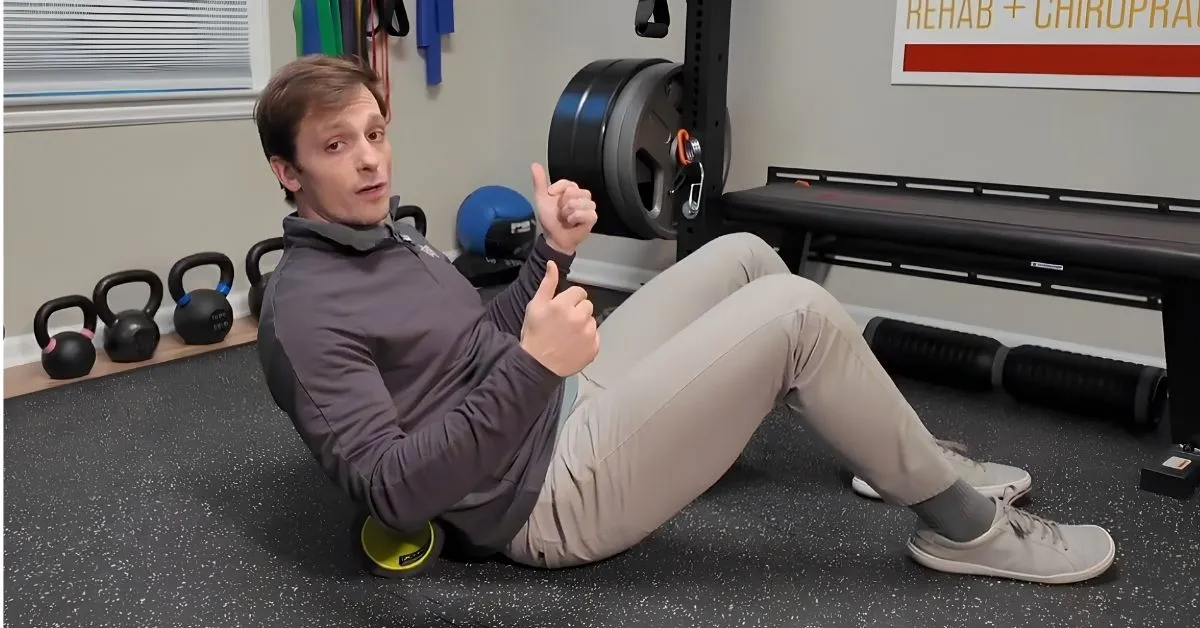
How to Improve Posture with a Foam Roller in 5 Minutes
Learn how to improve posture with a foam roller using a five-minute daily routine. Boost thoracic spine mobility and relieve stiff necks in
Read article →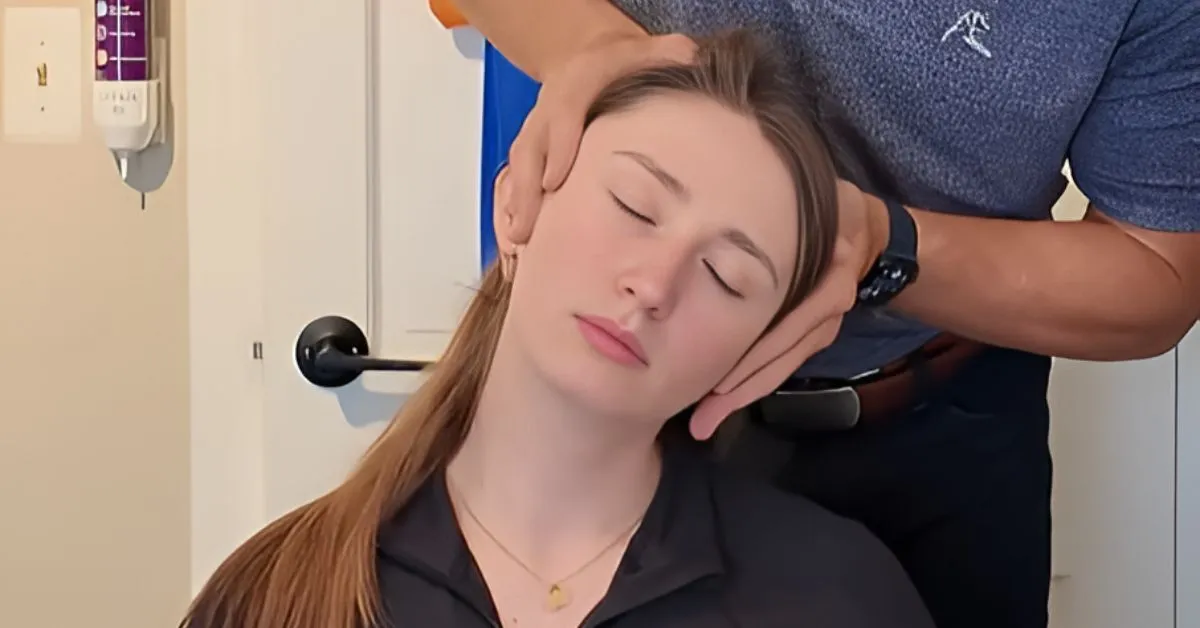
Suffering from Migraines? Try Upper Cervical Chiropractic
Discover natural migraine relief with upper cervical chiropractic care at REACH Rehab + Chiropractic in Plymouth, MI. Gentle adjustments tar
Read article →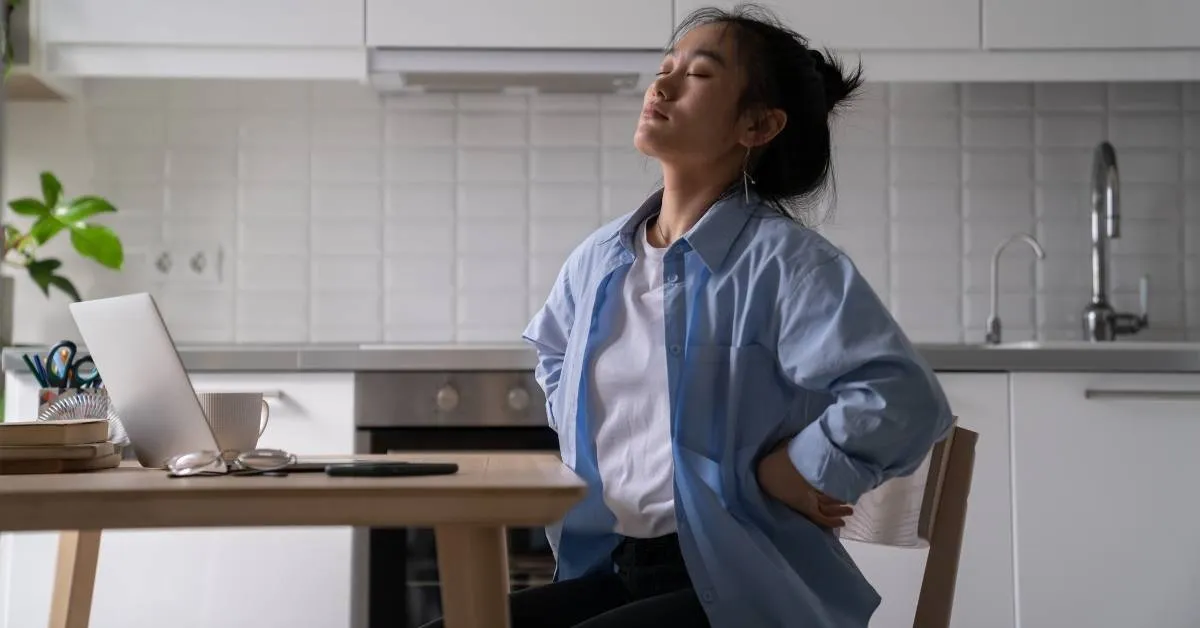
Desk Job Destroying Your Spine? Fix Your Work-From-Home Setup
Find relief for work from home back pain at REACH Rehab + Chiropractic. Learn how an ergonomic setup and proper posture can prevent aches an
Read article →Ready to get started at REACH?
5.0★ rated by 450+ patients across Plymouth and metro Detroit. Booking online is the fastest way in — or call/text (734) 335-0212.
Book Your First Visit →